
Service · Williston, ND
Air Sealing for Williston Homes
Air sealing a Williston home is usually the single most effective thing we can do to it for the money, and it is the step most insulation jobs skip. Insulation slows heat moving through a material. It does almost nothing to stop air moving through a gap. Here, with steady prairie wind pushing on one side of the house and pulling on the other all winter, those gaps move a lot of air. Cold air enters low, through the rim joist, the sill, and the foundation cracks. Warm air leaves high, through the ceiling and into the attic. The wind adds pressure to both ends of that loop.
We seal the house from the attic down, using foam, caulk, gaskets, and rigid blocking where it fits. On an older home in Williston, Ray, or Crosby, this is often the biggest improvement per dollar we can offer, and we do it before we blow attic insulation so the sealing is not buried under material where nobody can reach it again.
Right for
Older houses with drafts and uneven rooms, any attic about to be insulated, rim joists, and houses with high heating bills that already have some insulation.
Not the answer for
Houses with combustion appliances that have not been checked for proper venting, or spaces so tight already that the next step is mechanical ventilation rather than more sealing.
Why wind-driven infiltration matters more here
Air leaks through a house for two reasons: the stack effect, where warm air rises and escapes high while cold air is drawn in low, and wind pressure, which pushes air in on the windward side and sucks it out on the lee side. Most of the country deals mainly with the stack effect. Williston gets both, with a strong and steady wind on top of a long heating season.
That changes the math. A gap that leaks a little on a calm day can leak several times as much when the wind is up, and the wind is up a lot. The draft you feel on the floor near an exterior wall, the bedroom on the northwest corner that never warms up, the furnace that runs without the house feeling warm: those are infiltration symptoms. Adding insulation without sealing leaves them in place.
Sealing also protects the house. Warm, humid indoor air that leaks into an attic or wall cavity hits a cold surface and condenses. That is where frost on the underside of the roof deck, stained drywall at the ceiling edges, and wet insulation come from.
The usual leak list
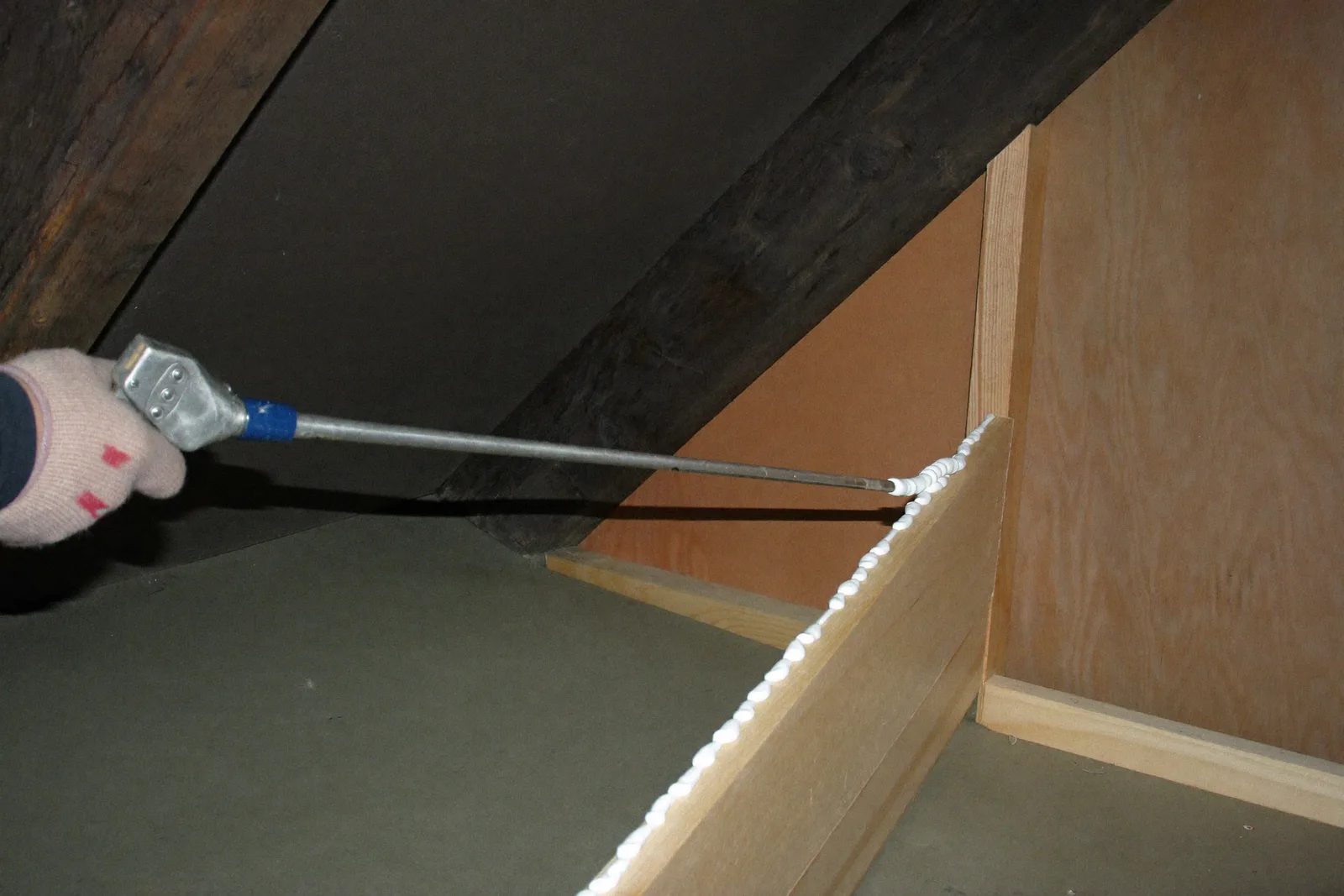
Every house is different, but the same spots come up again and again. In the attic: the top plates of every interior and exterior wall, where drywall meets framing; the attic hatch or pull-down stairs; recessed can lights, which are open chimneys into the attic unless they are a sealed IC-rated type; bath fan and kitchen exhaust housings; plumbing vent stacks and wiring penetrations; the chase around a chimney or flue; dropped soffits over kitchen cabinets and tub surrounds, which are often wide open to the attic; and the gap where a duct or a flue passes through the ceiling.
In the basement or crawl space: the rim joist, which is the band of framing sitting on the foundation, along with the sill plate under it, and every pipe, wire, and dryer vent that passes through. Around the house: window and door frames behind the trim, the bottom of the siding, outlets and switches on exterior walls, and the hole where the main electrical service or the gas line enters.
On an older Williston house the rim joist and the attic top plates are nearly always the two biggest items.
Foam, caulk, gaskets, and blocking
We match the sealant to the gap. Small cracks along top plates and around boxes get a bead of acrylic or polyurethane caulk. Larger gaps around pipes, wires, and ducts get one-part expanding foam. Big holes like an open chase or a dropped soffit get covered with rigid foam board or sheet metal cut to fit and sealed at the edges with foam. Anything near a chimney or metal flue gets sheet metal and high-temperature sealant, never foam, to keep a clearance to combustibles.
The attic hatch gets weatherstripping on the frame and a latch or weight so it compresses. Pull-down stairs get an insulated box that sits over the opening. Can lights get fire-rated covers sealed to the drywall, or get replaced with sealed LED retrofit fixtures. Outlets on exterior walls get foam gaskets behind the cover plates.
The rim joist is a candidate for two-part closed-cell spray foam, which seals and insulates in one pass and handles the irregular framing, wiring, and pipe penetrations far better than board and caulk. We cover that in detail on the crawl space and rim joist page.
Sequencing: seal first, then insulate
Order matters. Once insulation goes over the ceiling, the top plates and penetrations are out of reach without moving it all aside. So the sealing happens first, with the attic open, and the insulation goes over it. On a retrofit where the attic already has insulation, we move it back from the plates and penetrations, seal, and put it back before blowing the top-up.
The same logic applies to walls and basements. Seal the rim joist and the sill before framing a basement wall. Caulk the sheathing and the bottom plate before batts go in. Once the assembly is closed, the only remaining option for air sealing is from the outside or from the inside through the drywall, and both are harder and less complete.
A house that is sealed well can end up tight enough to need a controlled source of fresh air. We keep an eye on that, and on combustion appliances that need makeup air, and we will tell you if the house is reaching that point rather than sealing blindly.
What you get
- Often the largest comfort and heating improvement per dollar on an older house
- Stops the wind from pushing cold air through the floor and walls
- Keeps indoor moisture out of the attic and wall cavities
- Done before insulation so it stays accessible and the insulation performs
- Right material for each gap, including fire-safe detailing at flues and chimneys
- Makes every other insulation dollar you spend work harder
How the job runs
- 1
Leak survey
We walk the attic, basement, and exterior with a light and a smoke pencil on a windy day if we can get one, and list every bypass we find.
- 2
Clear and prepare
Existing insulation moved back from the work, debris cleared at the rim joist, and combustion clearances checked at flues.
- 3
Seal
Caulk, foam, rigid blocking, and gaskets applied gap by gap, working from the attic down to the rim joist.
- 4
Verify and hand off
We recheck the list, photograph the sealed items, put insulation back in place, and note anything that points toward needing ventilation.
What drives the cost of air sealing
The number and size of the bypasses is the main factor. A simple ranch with one hatch, a few plumbing stacks, and a clean rim joist is a short job. A house with a dozen can lights, a chimney chase, dropped soffits, pull-down stairs, and a rim joist full of pipes and wiring takes most of a day or more. Access matters: a tight attic with low pitch slows every task, and a rim joist behind a finished basement ceiling may not be reachable at all.
Whether existing insulation has to be moved aside and put back adds time. Using two-part closed-cell foam at the rim joist instead of board and caulk changes the material cost. If air sealing is bundled with an attic insulation job, the prep overlaps and the combined price reflects that.
Common questions
Should I air seal before adding attic insulation?
Yes. Sealing the top plates, penetrations, can lights, and hatch has to happen with the ceiling exposed, because once insulation covers them they are out of reach. Insulation over an unsealed ceiling still lets warm air into the attic, which is what causes ice dams and wet insulation in this climate.
Where do Williston houses leak the most?
Two spots account for most of it on older homes: the rim joist and sill plate at the top of the foundation, and the attic ceiling plane, especially top plates, the hatch, and recessed lights. The wind here makes both worse, pushing cold air in low and pulling warm air out high.
Can a house be sealed too tight?
It can get tight enough to need planned ventilation, such as an exhaust fan on a timer or a heat recovery ventilator, and to need makeup air for a furnace or water heater that draws from the room. We watch for that and tell you when the house is approaching it. Most older Williston homes are a long way from too tight.
Do you use spray foam for air sealing?
For small gaps we use caulk and one-part canned foam. For the rim joist, we often use two-part closed-cell spray foam because it seals and insulates the irregular framing in one step. We never use foam near chimneys or flues, where sheet metal and high-temperature sealant are required.
Will air sealing fix the cold room on the corner of my house?
Often, yes, or at least a large part of it. Corner rooms on the windward side get the most wind-driven infiltration through the rim joist, outlets, and window frames. Sealing those paths, along with checking the insulation in that wall and ceiling, usually brings the room in line with the rest of the house.
Where we do this work
We run air sealing jobs out of our shop on the west side of Williston, and across the region: Williston, ND, Watford City, ND, Crosby, ND and everything within about an hour of the shop.
Related services
Get a quote on air sealing
Send the basics and an owner comes back with a straight answer on what it needs, what it doesn't, and what it costs.