
Service · Williston, ND
Insulation Removal and Cleanout
Insulation removal is the job nobody wants and some attics in Williston need before anything else can happen. Old insulation that got wet from a roof leak or an ice dam, that took smoke from a fire, that has been soaked with animal urine, or that has been packed down to a fraction of its depth is not doing its job and may be doing harm. Blowing new material over it traps the problem. So we take it out.
We vacuum attics and open wall and floor cavities for houses and shops in Williston, Watford City, Tioga, Stanley, and the surrounding area, bag the material, haul it off, and leave the space clean and ready for air sealing and new insulation. Removal is also the first step on many spray foam jobs, since foam needs a clean substrate to bond to and an attic being converted to a conditioned space cannot have loose fill sitting on the ceiling.
Right for
Attics with wet, moldy, or smoke-damaged material, insulation fouled by animal waste, compressed and useless fill, and spaces being prepped for spray foam.
Not the answer for
Dry, clean, merely old insulation, which can usually be left in place and topped up, or spaces where the material may contain asbestos, which needs a licensed abatement contractor first.
When old insulation should come out
Dry, clean, old insulation does not need to come out just because it is old. We say that up front because removal is an added cost and we would rather top up than tear out. The cases where removal is the right call are specific.
Wet insulation. Fiberglass dries eventually but mats down and loses loft. Cellulose that has been soaked clumps, holds moisture against the drywall, and can grow mold. Water from an ice dam, a roof leak, or a plumbing failure above a ceiling usually means the wet area comes out.
Mold or smoke. Insulation that has taken mold from a long-term moisture problem or smoke from a house fire holds the odor and the spores. It cannot be cleaned in place.
Contamination. Animal waste and nesting material in an attic fouls the insulation. We remove and dispose of the contaminated material and clean the area. Keeping animals out and dealing with an active infestation is a job for a pest control company, not us, and we will say so.
Compressed or useless material. Old insulation that has been walked on, crushed under storage, or has settled to a couple of inches may be better removed and replaced than built on, especially when air sealing underneath it would mean moving all of it anyway.
Before a foam job. Spray foam applied to a roof deck to make a conditioned attic needs the old loose fill off the ceiling. Foam on a rim joist or a wall cavity needs the old batts pulled. Vermiculite, the gray-brown granular fill common in older houses, may contain asbestos and has to be tested and, if positive, handled by a licensed abatement contractor before we touch the space.
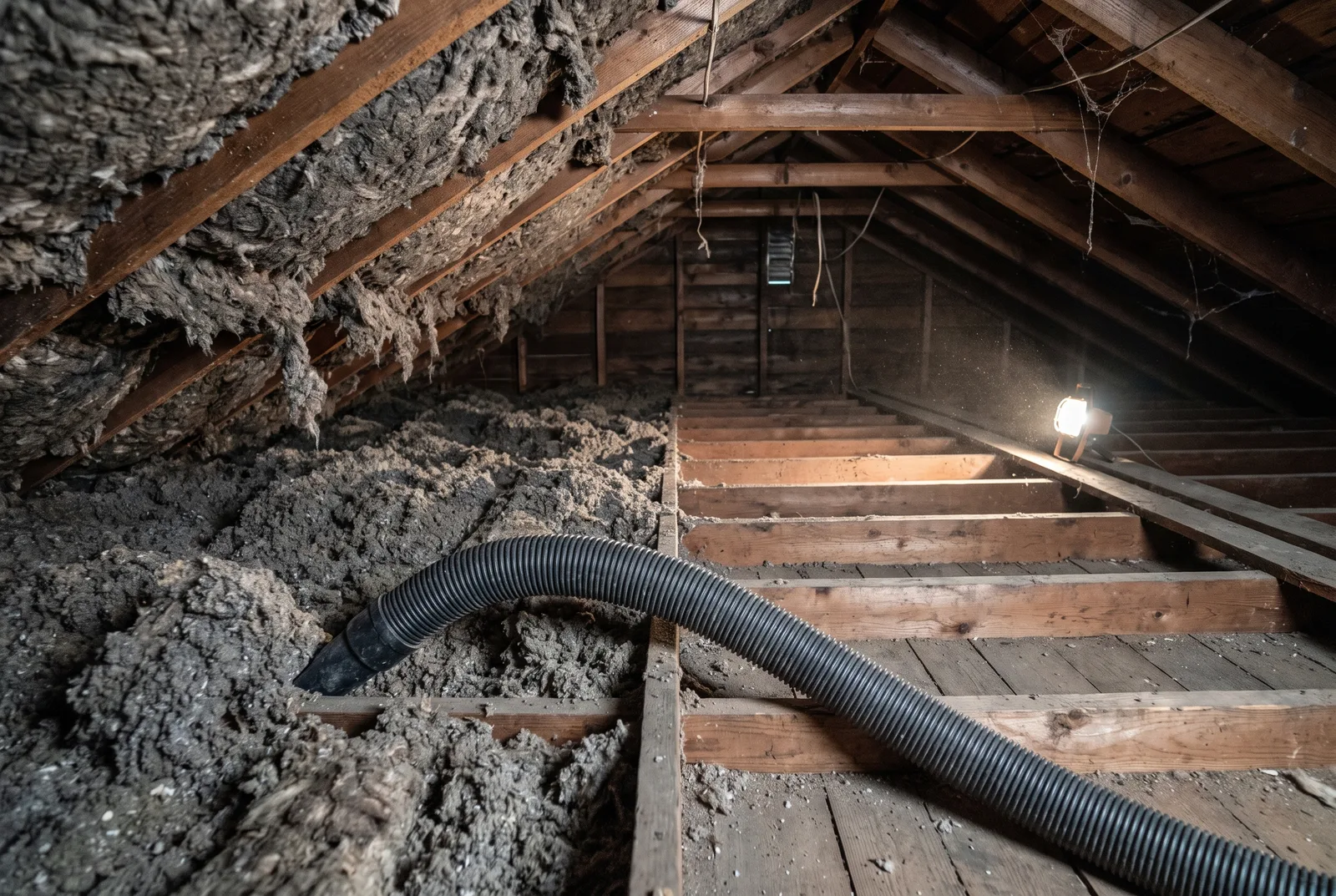
The vacuum process
We run a high-powered insulation vacuum from the truck with a long hose into the attic. The vacuum pulls loose fill, fiberglass, cellulose, and the dust and debris mixed in through the hose and into sealed collection bags or a container outside the house. Nothing gets carried through the living space in open containers.
Inside the attic, we work methodically from the far end toward the hatch, raking material toward the hose and pulling batts by hand where they are present. The hose reaches into the eaves and around trusses. Once the bulk is out, we go back over the attic floor and the top plates to pick up what the first pass missed. Fine dust gets a second vacuum with a HEPA unit when the material was moldy or contaminated.
We protect the path from the hatch to the door with floor covering, and we seal the hatch opening with plastic while we work so dust stays in the attic. When the removal is done, the ceiling plane is bare drywall or plaster, the top plates and penetrations are exposed, and we can see every bypass that needs sealing.
Bagging, disposal, and what we find up there
Removed insulation is bagged in heavy contractor bags or captured in the vacuum container and hauled to the landfill. We handle the disposal; it does not sit in your driveway. Contaminated material is bagged separately and sealed.
What we find in attics around Williston is fairly predictable. Old cellulose over older fiberglass over the original rock wool from when the house was built. Wiring splices outside of boxes. Bath fans venting into the attic instead of outside. Roof leak stains nobody knew about. Can lights buried in insulation with scorch marks around them. Nests, droppings, and occasionally the animal. Sometimes vermiculite, which stops the job until it is tested.
We photograph anything that matters and show you before we move on, because most of these items need a decision: an electrician for the splices, a roofer for the leak, a ducting fix for the bath fan. A bare attic is the best chance you will get to fix them.
Prepping for new material
Removal without a plan for what comes next is half a job. Once the attic is clean, we do the air sealing that the old insulation was hiding: top plates, penetrations, the hatch, can light covers, chase blocking. We install baffles at the eaves if the attic is going back to loose fill. If the attic is being converted to a conditioned space with foam on the roof deck, we prep the deck and block the soffit vents.
Then the new insulation goes in, typically the same visit or the next day. We do not leave a house with a bare ceiling over a weekend in January. The quote for a removal job includes the replacement insulation and the air sealing so you see the whole picture, and we will tell you if the old material is fine to leave and top up instead.
What you get
- Wet, moldy, smoke-damaged, or contaminated material out of the house instead of buried under new fill
- Vacuum removal with the material bagged outside, not carried through the living space
- Exposes the ceiling plane so air sealing can be done properly
- Roof leaks, bad wiring, and disconnected bath fans found and documented while the attic is open
- Disposal handled by us, with contaminated material bagged separately
- Straight answer on whether removal is needed or the old insulation can stay
How the job runs
- 1
Inspection
We check what the material is, how wet or contaminated it is, whether vermiculite is present, and whether removal is actually the right call.
- 2
Protect and set up
Floor covering on the path, plastic at the hatch, vacuum staged outside with the hose run to the attic.
- 3
Remove and clean
Loose fill vacuumed and batts pulled, a second pass on the floor and plates, HEPA vacuum on the dust when the material was foul.
- 4
Seal and reinsulate
Air sealing and baffles while the attic is bare, then new insulation blown or sprayed, and disposal hauled off.
What drives the cost of insulation removal
Volume is the main factor: square footage of attic times depth of material. A shallow layer of old fiberglass is a quick job, while 12 inches of wet cellulose is not. Material type matters because batts are pulled by hand and loose fill goes through the vacuum. Condition matters too. Contaminated or moldy material means extra protection, a HEPA pass, and separate bagging.
Access drives labor time: a walk-up attic with a large hatch versus a scuttle hole and a low roof pitch with tight eaves. The length of hose run from the truck to the attic and the disposal quantity show up as well. Because removal is almost always followed by air sealing and new insulation, we quote the whole sequence together so the replacement cost is not a surprise.
Common questions
Does old attic insulation need to be removed before adding new?
Usually not. Dry, clean insulation can be raked level and topped up. Removal makes sense when the old material is wet, moldy, smoke-damaged, fouled by animals, compressed to almost nothing, or in the way of a spray foam job. We inspect and tell you which case you have before quoting.
How do you get the insulation out of the attic?
With a truck-mounted insulation vacuum and a long hose run up into the attic. The material is pulled straight into sealed bags or a container outside. Batts are pulled by hand. We cover the path inside the house and seal the hatch so dust stays in the attic while we work.
Do you remove insulation with animal droppings in it?
Yes, we remove and dispose of contaminated insulation and clean the area afterward. We are not a pest control company, so keeping animals out of the attic and dealing with an active infestation is work for them, and we recommend having that done before the new insulation goes in.
What if my attic has vermiculite?
We stop. Vermiculite from older houses may contain asbestos and has to be tested. If it tests positive, a licensed abatement contractor removes it, and we come in afterward for air sealing and new insulation. We will not vacuum vermiculite and you should not disturb it either.
How long after removal does the new insulation go in?
Typically the same day or the next. We schedule removal, air sealing, and reinsulation together so the house is not sitting with a bare ceiling, which matters a lot in a Williston winter. If something we find needs another trade first, like a roof leak or wiring, we will tell you right away.
Where we do this work
We run insulation removal jobs out of our shop on the west side of Williston, and across the region: Williston, ND, Tioga, ND, Sidney, MT and everything within about an hour of the shop.
Related services
Get a quote on insulation removal
Send the basics and an owner comes back with a straight answer on what it needs, what it doesn't, and what it costs.