
Cold stays out. Warm stays in. Insulation contractor in Williston, North Dakota
Spray foam, blown-in, batts, and air sealing for homes, shops, pole barns, and new builds across Williston and the Bakken. Quoted by the owner, installed by the owner.
Owner-installed. No sales rep, no crew you've never met.
Zone 7 spec. Every assembly checked against the 2021 code minimums.
Williston based. 1926 44th St W, one hour radius.
What we install
The right material for the assembly, not the one with the best margin.
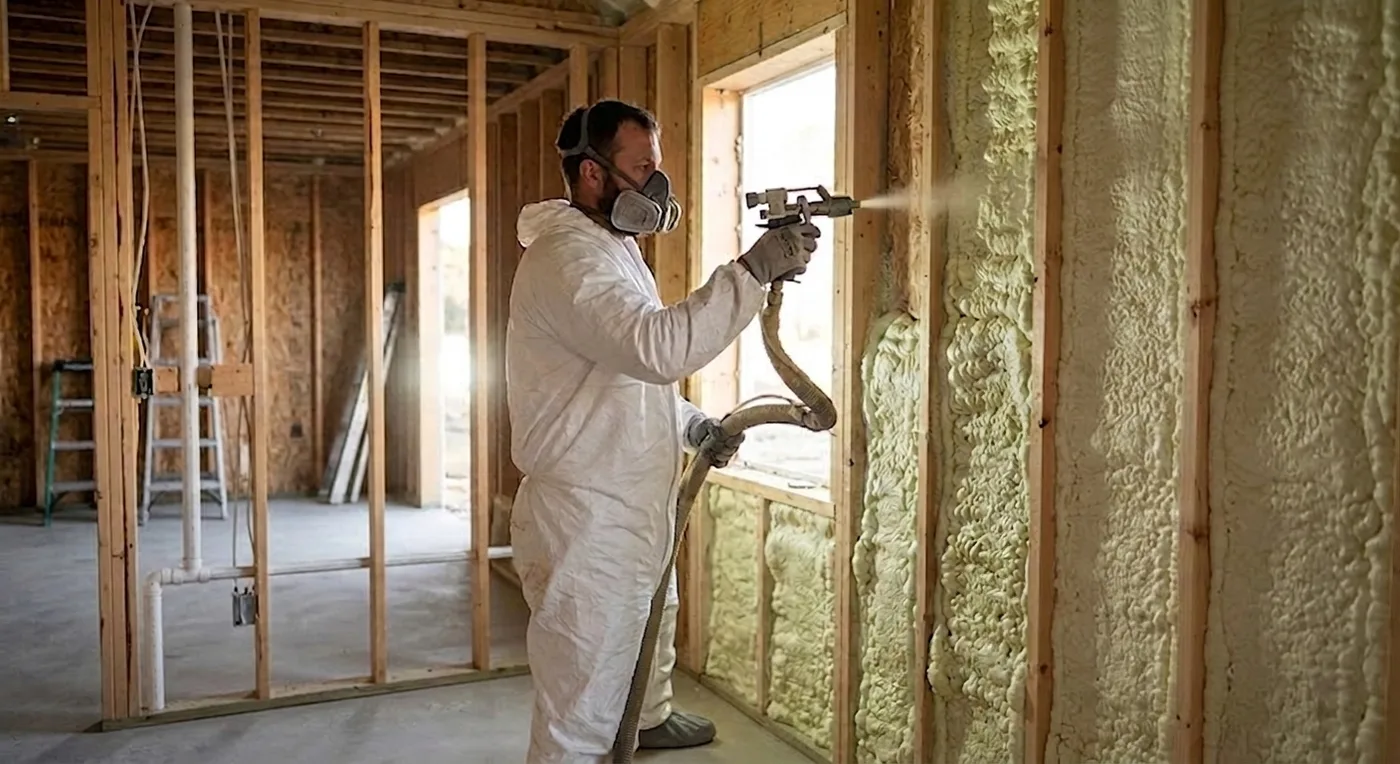
Spray Foam
Closed-cell and open-cell spray foam for the assemblies where foam actually earns its cost: rim joists, crawl spaces, metal buildings, cathedral ceilings, and shops.
Spray foam insulation →Blown-In Attic Insulation
Loose-fill fiberglass or cellulose blown to the Climate Zone 7 target of R-60, with the top plates sealed and the eaves baffled before the first bag goes in.
Learn more →Batt and Mineral Wool
Fiberglass batts and mineral wool, cut to fit each cavity with no compression and no gaps, for walls, garages, basements, sound partitions, and flash-and-batt assemblies.
Learn more →Rigid Foam Board
XPS, EPS, and polyiso board for continuous exterior walls, foundation walls, slab edges, and under-slab, chosen for where it goes and taped so it actually performs.
Learn more →Air Sealing
Finding and sealing the gaps that let wind push cold air through a house, done before insulation so the insulation can do its job.
Learn more →Also: rigid foam board, commercial insulation, and the full list.
Why it works
One continuous line around the whole building.
Insulation slows heat. Air sealing stops the wind from carrying it off anyway. A building only performs when both form one unbroken line: floor, wall, ceiling, no gaps at the rim joist or the top plate. That line is what we build.
- Feels: no cold floors in January, no hot upstairs in July.
- Sounds: less wind, less road noise, a quieter shop.
- Works: the furnace cycles less, the ice dams stop, the dew point stays out of the wall.
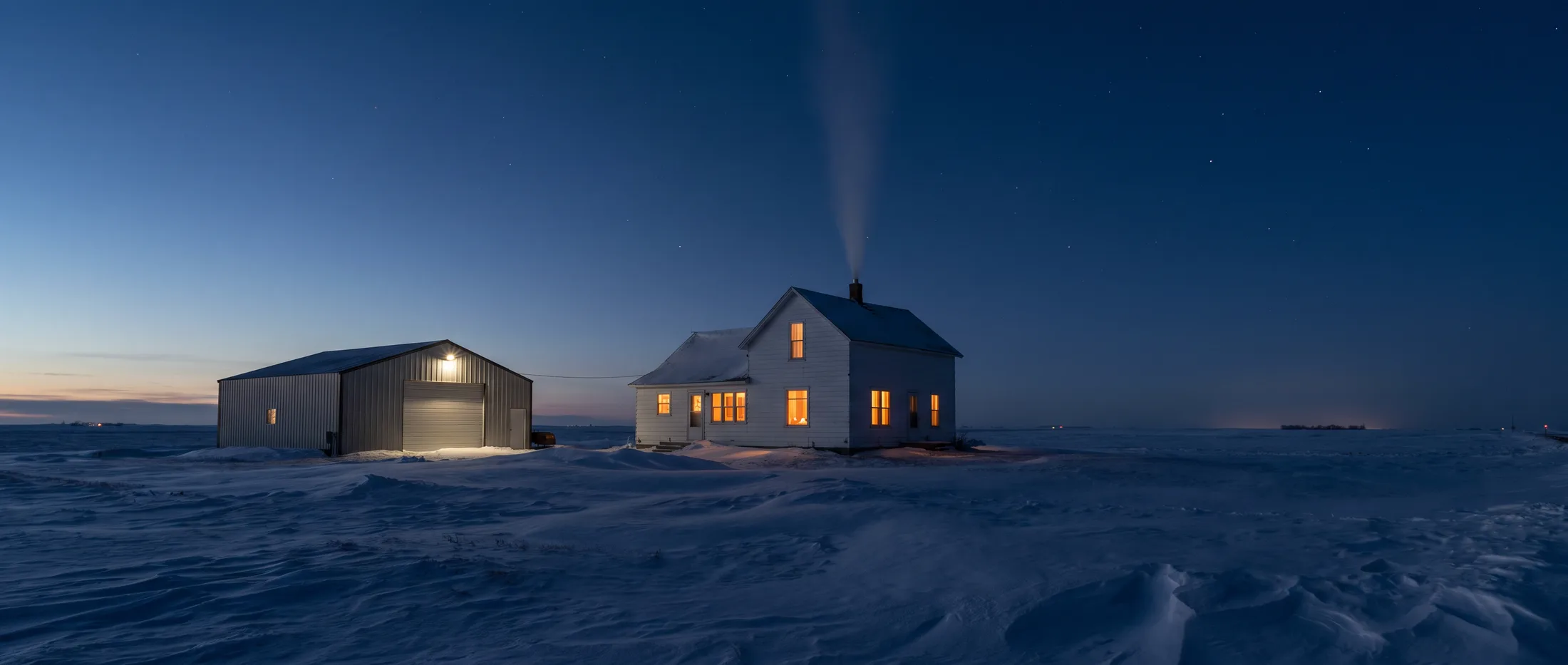
Forty below outside. Seventy inside.
That gap is the whole job.
For builders and general contractors
One call. On schedule. Passes inspection.
New construction is the work we're set up for. Here is how a new-construction job runs with us, from the rough-in walk to final.
- 1
Rough-in walk
We walk the frame with you, confirm assemblies, and flag anything that will fail inspection before we show up with a rig.
- 2
Spray
Foam in rim joists, rough walls, and anywhere the plans call for it. One day for most houses.
- 3
Inspection
Thickness and coverage ready for the inspector. We can meet them on site.
- 4
Batts and blow
Batts, mineral wool, or blown-in to finish the envelope once drywall is scheduled.
- 5
Attic final
Blown-in to R-60 with baffles, after the ceiling is hung. Done, documented, invoiced once.
Where spray foam earns its cost
Shops, crawl spaces, steel, and new walls.
Pole Barns & Shops
Closed-cell foam sprayed direct to the steel skin of post-frame barns and shops, stopping the condensation drip and making the building cheap to heat.
Learn more →Crawl Spaces & Rim Joists
Closed-cell foam on the rim joist and crawl space walls, with a ground vapor barrier, to fix the cold floors and drafts almost every older Williston house has.
Learn more →New Construction
Foam scheduled into the build: rim joists, roof decks, and flash-and-batt walls sprayed after mechanicals and before drywall, ready for the insulation inspection.
Learn more →Metal Buildings
Closed-cell foam for steel-framed shops, oilfield service buildings, and commercial metal structures, including removal of failed fiberglass blanket.
Learn more →Service area
Williston and the Bakken.
Based at 1926 44th St W in Williston. We run the whole northwest corner of North Dakota and across the line into eastern Montana, about an hour out in any direction.
Every town we cover →Straight answers
What kind of insulation is best for a house in Williston?
It depends on the assembly. Attics almost always want blown-in fiberglass or cellulose to R-60 over sealed top plates. Rim joists, crawl spaces, and metal buildings want closed-cell spray foam. Walls in new construction can go either way. We look at the building and spec what each part needs.
Do you only do spray foam?
No. We install spray foam, blown-in fiberglass and cellulose, fiberglass batts, mineral wool, rigid foam board, and air sealing, and we remove old insulation. Foam is our flagship because it solves problems nothing else does here, but it isn't the answer for every surface, and we'll say so.
Do you work with builders and general contractors?
Yes. It's the work we're set up for. One sub handles foam, batts, and the attic blow, so the schedule has one name on it. We walk the frame before the rig shows up, spray after mechanicals, and have thickness and coverage ready for the inspector.
How far out of Williston do you go?
About an hour in any direction: Watford City, Tioga, Ray, Stanley, and Crosby in North Dakota, plus Sidney, Fairview, and Culbertson across the Montana line. Farther out in the Bakken is a conversation, not a no.
Who actually shows up to do the work?
The owner. Drew quotes the job, and Drew is on the rig when it's installed. There is no sales rep, and the person who told you what the building needs is the person who makes sure it gets it.
Tell us about the building
An owner reads every request. No pressure, no upsell. If the building doesn't need foam, we'll say so.
Get a quote on the building
Send the basics and an owner comes back with a straight answer on what it needs, what it doesn't, and what it costs.