
Service · Williston, ND
Blown-In Attic Insulation in Williston, ND
Blown-in attic insulation is the most direct way to bring a Williston house up to the ceiling R-value this climate actually calls for. Williams County sits in IECC Climate Zone 7, the coldest zone in the lower 48, and the 2021 code minimum for a ceiling here is R-60. Most attics we open up in Williston, Ray, Tioga, and Watford City are sitting at a fraction of that, with insulation that has settled, been pushed around by electricians, or simply never got topped up after the house was built.
We blow loose-fill fiberglass or cellulose across the attic floor to a marked depth, but only after the attic is air sealed and the eaves are baffled. The order matters. Insulation slows heat that moves by conduction. It does very little against warm air that rises through gaps in the ceiling, and in a Williston winter that rising air is what melts snow on the roof and builds ice at the eave.
Right for
Open attics with a flat or accessible ceiling plane, attic top-ups, and any house that is losing heat through a thin or patchy layer up top.
Not the answer for
Cathedral ceilings with no attic, vented attics with active roof leaks, or spaces where wet or contaminated insulation needs to come out first.
Fiberglass or cellulose, and how we decide
Both materials do the job when installed to the right depth. Blown fiberglass is light, does not absorb moisture, and holds its loft over time. Cellulose is denser, packs tighter around wiring and framing, and does a better job slowing air movement through the insulation layer itself. Cellulose is made from recycled paper treated with borate for fire and pest resistance; fiberglass is spun glass with no additives to speak of.
In a leaky older attic where we cannot seal every gap, cellulose often wins because its density helps. In a clean, well-sealed attic or one where we are topping up existing fiberglass, blown fiberglass is usually the better match. We also look at the ceiling drywall. Older half-inch drywall on 24-inch centers can sag under a full load of wet-spray cellulose, so we stick to dry-blown material and keep the weight reasonable.
Either way, we are aiming at R-60. That works out to roughly 16 to 20 inches of settled depth depending on the product, and we install to the manufacturer's coverage chart rather than guessing.
Air sealing the top plates before anything else
The top of every interior wall is a gap. Drywall meets the top plate and leaves a crack along both sides, and every wire or pipe that drops down from the attic leaves a hole. Warm house air finds those gaps all winter. Once insulation is blown over them, they are invisible and nearly impossible to fix without digging.
So we seal first. Top plates get a bead of foam or caulk along both sides. Wire and plumbing penetrations get foamed. The attic hatch gets weatherstripping and a rigid insulated cover. Recessed can lights get a fire-rated cover box sealed to the drywall. Bath fan housings get sealed and the duct gets checked to confirm it actually exits the roof rather than dumping into the attic. Chimney chases and dropped soffits get blocked with sheet metal or rigid foam and foamed at the edges.
This step is where the heat loss actually stops. Blowing R-60 over an unsealed ceiling is like wearing a heavy coat with the zipper open.
Baffles, ventilation, and ice dams
An ice dam forms when a warm attic melts the snow on the upper roof. Meltwater runs down to the eave, which sits over the unheated overhang and stays cold, and it refreezes there. The ridge of ice backs water up under the shingles. Williston gets the snow and the cold to make this happen, and the wind helps by drifting snow onto one side of the roof.
The fix is to keep the attic as cold as the outdoors. That means stopping warm air from getting up there (air sealing), slowing heat conduction through the ceiling (R-60), and letting outdoor air move through from the soffits to the ridge (ventilation). Loose-fill insulation blown to full depth will bury the soffit vents unless something holds it back, so we install foam or cardboard baffles in every rafter bay at the eave before we blow. The baffle keeps a channel open from the soffit up past the insulation, and a blocker at the bottom keeps the material from sliding out onto the soffit.
We also check that the attic actually has intake and exhaust. Plenty of Williston houses have a ridge vent and painted-over soffits, or soffit vents and no exhaust at all.
Top-ups over existing insulation and depth markers
If the existing insulation is dry, clean, and reasonably even, we blow over it. Fiberglass over fiberglass, cellulose over either. There is no need to remove old material just because it is old. We do rake it level first so the new layer is uniform, and we still do the air sealing, which means moving the old insulation aside along the top plates and putting it back.
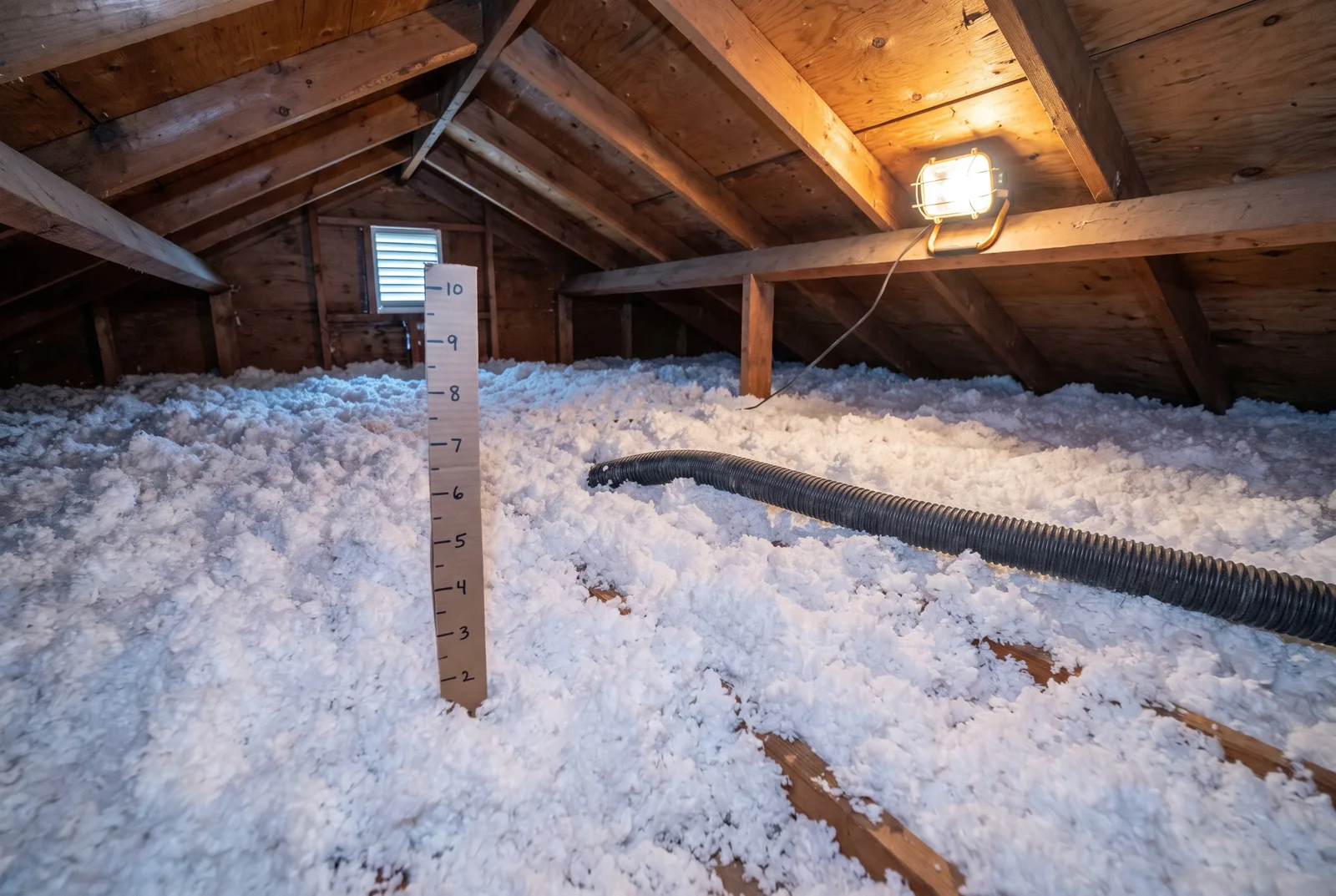
Before we blow, we staple depth markers to the trusses across the attic. These are simple rulers that show the installed depth from anywhere in the attic, and we leave them in place. They let you, an inspector, or an appraiser confirm the depth years later without a tape measure. The attic hatch gets a card noting the product, the installed depth, and the settled R-value.
If the old material is wet, moldy, smoke-damaged, or contaminated, it comes out first. See our insulation removal page for how that works.
What you get
- Brings the ceiling to the Climate Zone 7 target of R-60 in a single visit
- Top plates, penetrations, and the attic hatch sealed before insulation covers them
- Baffles in every rafter bay so soffit ventilation keeps working
- Cooler attic in winter, which is the root fix for ice dams
- Depth markers and a hatch card so the installed R-value is verifiable
- Owner on site doing the work, not a crew working off a printed ticket
How the job runs
- 1
Attic inspection
We go up with a light and a probe, measure existing depth, check for moisture, find the bypasses, and confirm the soffit and ridge vents are real.
- 2
Air sealing and prep
Foam and caulk at the top plates and penetrations, covers on can lights, an insulated hatch cover, and baffles stapled at the eaves.
- 3
Blow to depth
Hose fed from the truck, material blown evenly across the attic floor to the marked depth, checked against the coverage chart by bag count.
- 4
Walkthrough and record
We photograph the finished attic, leave the depth markers, fill out the hatch card, and go over what we found and what we sealed.
What drives the cost of blown-in attic insulation
The biggest factor is square footage of attic floor and how much depth we need to add. A top-up from R-30 to R-60 uses far less material than a bare attic. Material choice matters a little, with cellulose and fiberglass priced differently per installed R-value. The amount of air sealing needed is the next factor: a house with a dozen can lights, two bath fans, and a chimney chase takes more prep time than a simple ranch with one hatch.
Access affects the price too. A walk-up attic with a full hatch is faster than a scuttle hole in a closet ceiling. Low-pitch roofs with tight eaves slow down the baffle work. If old insulation has to come out first, that is a separate line item. We break all of this out on the quote so you can see where the number comes from.
Common questions
How much insulation should a Williston attic have?
The 2021 IECC minimum for a ceiling in Climate Zone 7, which covers Williams County, is R-60. Depending on the product, that is roughly 16 to 20 inches of blown fiberglass or cellulose at settled depth. Many existing Williston attics have well under half that, especially houses built before the oilfield boom.
Can you blow new insulation over the old?
Yes, as long as the old material is dry, clean, and free of mold or smoke damage. We rake it level, air seal the ceiling underneath, and blow the new layer on top. Wet, compressed, or contaminated insulation should come out first, and we handle that removal as a separate step.
Will blown-in insulation stop my ice dams?
It helps a great deal, but only as part of the full fix: air sealing the ceiling, insulating to R-60, and keeping soffit-to-ridge ventilation open with baffles. Insulation alone, blown over an unsealed ceiling, often does not stop ice dams because warm air still reaches the roof deck.
Is cellulose or fiberglass better for an attic here?
Both reach R-60 and both hold up in Williston winters. Cellulose is denser and slows air movement better in an attic we cannot fully seal. Blown fiberglass is lighter, does not hold moisture, and is the usual choice for top-ups over existing fiberglass. We recommend based on the attic, not on a preference.
How long does an attic job take?
Most single-family attics are one day, including air sealing and baffles. Larger attics, ones with a lot of bypasses to seal, or jobs that include removal first can run into a second day. We tell you the expected schedule with the quote.
Where we do this work
We run blown-in attic insulation jobs out of our shop on the west side of Williston, and across the region: Williston, ND, Sidney, MT, Tioga, ND and everything within about an hour of the shop.
Related services
Get a quote on blown-in attic insulation
Send the basics and an owner comes back with a straight answer on what it needs, what it doesn't, and what it costs.