
Service · Williston, ND
Commercial Insulation in Williston, ND
Commercial insulation in Williston covers a wider range of buildings than most towns its size see: oilfield service shops along US-2 and US-85, warehouses and equipment yards, ag buildings, apartment buildings that went up during the boom, and the municipal and school buildings that serve the county. Each of those has a different assembly, a different code path, and a different set of people to coordinate with. We handle the insulation scope on all of them, from a single shop bay to a multifamily building with fire-rated party walls.
Our owner quotes the job, walks it with the GC or the owner, and installs it. That means the person who looked at the drawings is the person running the rig. For a business, it also means a straight answer about schedule, about whether the building needs foam or would be fine with something cheaper, and about what the inspector will want to see when we are done.
Right for
Metal and post-frame shops, warehouses, service buildings, ag and equipment storage, multifamily and fire-rated assemblies, and public buildings that need a documented install.
Not the answer for
Large mechanical or pipe insulation scopes and industrial process insulation, which are specialty trades we do not cover.
Spray foam on metal buildings and shops
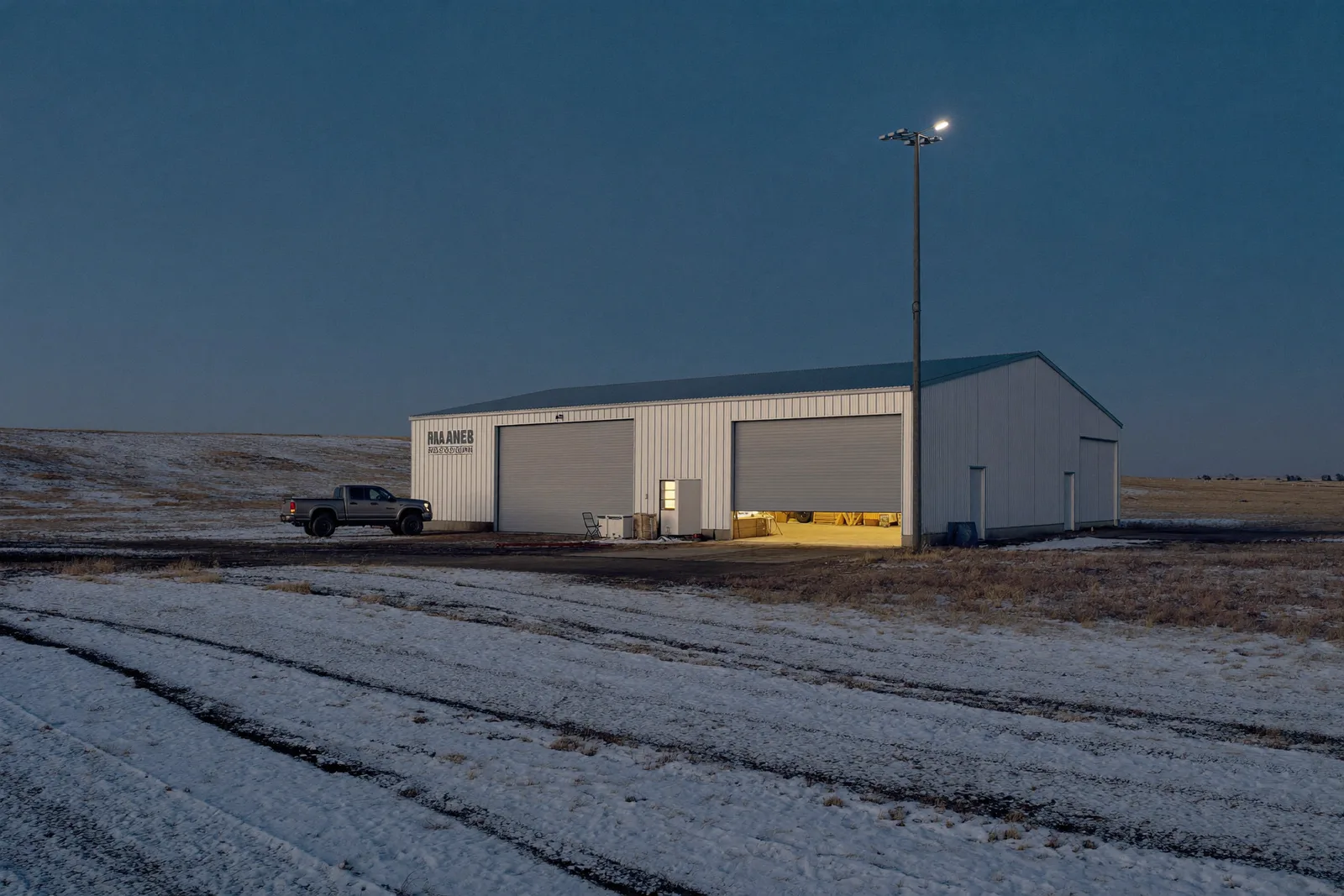
Steel-skinned buildings are the most common commercial structure around Williston and the one where insulation choice matters most. Bare metal sweats on the inside whenever the steel gets colder than the dew point of the indoor air, which in a heated shop in winter is most of the time. Fiberglass blanket between the purlins slows that down but does not stop it, and the vinyl facing tears and sags with use.
Closed-cell spray foam applied directly to the inside of the metal skin solves the condensation problem at the source. At roughly R-6 to R-7 per inch and acting as a vapor retarder at around 2 inches, it keeps the steel warm, sticks to it, and seals every lap and fastener. Two to three inches on walls and roof is a common spec for a heated shop; unheated equipment storage may only need a thinner coat to stop the dripping. Foam also stiffens the panels and quiets rain and wind noise on the roof.
We spray from lifts for tall bays and work around racking, overhead doors, and in-floor heat loops. Exposed foam in an occupied building needs a thermal or ignition barrier, and we coordinate that with the GC or apply an intumescent coating ourselves.
Blown-in over drop ceilings and in attics
Offices, retail spaces, clinics, and the office portion of a shop usually have a suspended ceiling with a framed or truss attic above it. Blown-in fiberglass or cellulose on top of a proper air barrier is the cost-effective answer there, same as a house. The difference is that the air barrier in a commercial building is often missing or is the ceiling tile itself, which does not count. We install a continuous barrier at the ceiling plane or at the roof deck as the assembly requires, seal the penetrations, and blow to the required depth.
In buildings with a lot of mechanical above the ceiling, we coordinate with the HVAC and electrical trades so ducts and cable trays are in before we blow, and we leave walkways or boards where access is needed for maintenance. Depth markers and a coverage record go to the GC for the inspection file.
Batts and mineral wool in fire-rated assemblies
Multifamily buildings, mixed-use, and any structure with occupancy separations rely on fire-rated wall and floor-ceiling assemblies, and many of those assemblies specify mineral wool. It does not burn, it holds its shape at fire temperatures, and the tested assemblies from the manufacturers and the gypsum association call it out by thickness and density. Substituting fiberglass in a rated wall can void the rating.
We install mineral wool to the assembly listing: full-depth, friction-fit, no gaps at the plates, with firestopping at the penetrations handled per the detail. Party walls between units, corridor walls, shaft walls, and the floor-ceiling assemblies between apartments are the usual scope. Mineral wool also handles the sound rating that multifamily codes require between units, so one product usually does both jobs.
Standard fiberglass batts go in the non-rated walls and ceilings, installed with the same cut-and-fit standard we use in a house. On a commercial job the inspector is usually looking at every bay before drywall, and so are we.
Working around your business, the GC, and the inspector
A shop cannot shut down for a week so we can spray it. We schedule around operations: evenings, weekends, one bay at a time with the others running, or the off season for an ag building. Spray foam needs the area clear of people while it cures, and we tell you how long that is for your building so you can plan. For occupied multifamily or office space we work floor by floor and keep the dust and odor contained.
On new construction we slot into the GC's schedule after rough-in inspections and before drywall, and we show up when we say we will so the schedule holds. We read the drawings and specs ahead of the walk so we are quoting what the architect drew, and we flag it if the spec calls for something that will not work in this climate, like polyiso on the cold face of a wall.
For the inspection, we provide what the jurisdiction wants: product data sheets, the foam manufacturer's certification, installed thickness and coverage records, photos of the work before it is covered, and the ignition barrier details where foam stays exposed. Municipal and school work often wants this packaged formally, and we do that.
What you get
- Condensation on metal buildings stopped at the source with closed-cell foam on the skin
- Lower heating load on large, tall spaces that are expensive to keep warm through a Williston winter
- Mineral wool installed to the listed fire-rated and sound-rated assembly
- Scheduling that works around operations instead of shutting them down
- One person quoting, installing, and answering to the GC
- Inspection documentation delivered without being asked twice
How the job runs
- 1
Walk and review
We walk the building or the drawings with you or the GC, check the assemblies, and note the schedule and access constraints.
- 2
Scope and quote
A written scope by area and material, with thickness and R-value, thermal or ignition barrier needs, and the proposed schedule.
- 3
Install in phases
Work sequenced by bay, floor, or area around operations and the other trades, with lifts and containment as needed.
- 4
Document and close out
Photos before cover, thickness and coverage records, product data, and any certifications sent to you or the GC for the inspection file.
What drives the cost of commercial insulation
Square footage of wall and roof is the base, followed by the material and its thickness: closed-cell foam per inch costs more than blown-in or batts, and a heated building needs more of it than cold storage. Height and access are bigger factors on commercial work than residential, since tall bays mean lift time and staging. Whether foam will stay exposed and need an ignition barrier or intumescent coating is a separate line.
Scheduling affects price. Night, weekend, or phased work around an operating business takes more setup time than an empty building. Fire-rated assemblies with mineral wool and firestopping cost more than standard batts. On new construction, coordination with other trades and the documentation package are part of the scope. We itemize the quote by area and material so the owner or GC can see each piece.
Common questions
What is the best insulation for a metal shop in Williston?
Closed-cell spray foam applied to the inside of the steel skin, usually 2 to 3 inches for a heated shop. It stops condensation by keeping the steel above the dew point, seals every lap and fastener against the wind, and adds R-value in the thin space between the girts and the skin. An exposed-foam area needs an ignition barrier.
Can you insulate a shop while we keep working in it?
Usually, yes. We work one bay or area at a time and schedule spray foam for evenings, weekends, or slow periods. The area being sprayed has to be clear of people during application and for a cure period afterward, and we give you that window ahead of time so operations can plan around it.
Do you do multifamily and fire-rated walls?
Yes. We install mineral wool and fiberglass in party walls, corridor walls, shaft walls, and floor-ceiling assemblies to the listed assembly, including thickness and density, and coordinate firestopping at penetrations with the GC. Mineral wool typically covers both the fire rating and the sound rating between units.
What do you provide for the inspector?
Product data sheets, the spray foam manufacturer's installer certification where applicable, installed thickness and coverage records, photos of each area before it was covered, and the ignition or thermal barrier details for exposed foam. We package this for the GC or the owner so the inspection file is complete.
Do ag buildings and cold storage need insulation?
Unheated equipment storage often only needs a thin layer of closed-cell foam on the roof skin to stop condensation dripping on equipment. A heated shop or livestock building needs a full insulation assembly. We will tell you which one your building is and not sell foam the building does not need.
Where we do this work
We run commercial insulation jobs out of our shop on the west side of Williston, and across the region: Williston, ND, Ray, ND, Fairview, MT and everything within about an hour of the shop.
Related services
Get a quote on commercial insulation
Send the basics and an owner comes back with a straight answer on what it needs, what it doesn't, and what it costs.